

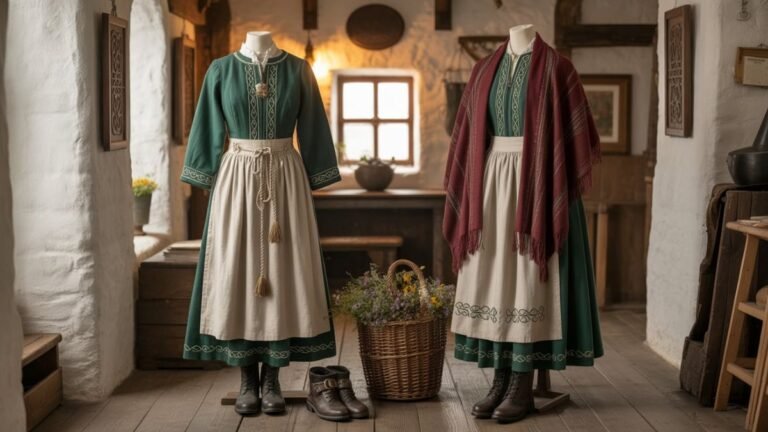
Ireland’s cultural identity is woven deeply into its clothing traditions, shaped by centuries of history, climate, craftsmanship, and storytelling. From rugged coastal villages to rolling green hills, what people wore was never just about warmth or function; it reflected community, status, and survival. Even today, echoes of these garments influence modern fashion, festivals, and national pride. Understanding traditional Irish clothing helps us understand Ireland itself, because every stitch tells a story of resilience, artistry, and belonging.
Origins Rooted in Climate and Community
The roots of traditional Irish clothing lie in Ireland’s unpredictable weather and rural lifestyle. Heavy rainfall, strong winds, and cold temperatures demanded garments that were practical, durable, and warm. Early Irish communities relied on locally sourced wool and linen, materials that were readily available and well-suited to the climate. Clothing was handcrafted at home, often by women, using skills passed down through generations, making each piece deeply personal and unique.
Beyond practicality, clothing also reflected social identity. Colors, patterns, and fabric quality could hint at regional origins or economic standing. While wealthier families had access to finer dyes and softer wool, working-class communities focused on longevity and repairability. This balance between necessity and expression is what gives traditional Irish clothing its enduring character and authenticity.
Iconic Garments and Their Cultural Meaning
Some garments became powerful symbols of Irish heritage over time. The Aran sweater, for example, emerged from fishing communities along the western coast. Its thick wool and intricate cable patterns were designed for warmth and durability, but the stitches also carried symbolic meanings connected to family, luck, and the sea. Each sweater often told a story unique to the wearer’s clan or village.
The Irish cloak, or brat, was another defining piece, worn by both men and women for centuries. Made from heavy wool, it served as protection against harsh weather and doubled as a blanket when needed. Kilts and léine shirts, though often associated broadly with Celtic culture, also played roles in Ireland’s clothing history, adapting over time as social and political influences shaped everyday dress.
Materials, Craftsmanship, and Traditional Techniques
The craftsmanship behind traditional Irish clothing reflects patience, skill, and respect for natural materials. Wool was the cornerstone fabric, valued for its insulating and water-resistant properties. Sheep farming was widespread, and wool processing became a vital part of rural life. Spinning, dyeing, and weaving were time-intensive processes, often done entirely by hand, resulting in garments that could last decades.
Natural dyes derived from plants, roots, and mosses gave clothing earthy tones such as browns, greens, and muted reds. These colors blended with the Irish landscape and were less likely to show wear. Linen, made from flax, was commonly used for shirts and undergarments, prized for its breathability and comfort. This deep connection between land, material, and maker is central to understanding traditional Irish clothing as more than fashion.
Regional Influence and Everyday Wear
Ireland’s regions subtly influenced clothing styles, shaped by geography and occupation. Coastal communities favored heavier knits and layered garments due to colder winds and sea spray. Inland farming areas leaned toward practical, flexible clothing that allowed ease of movement during labor-intensive work. Despite these differences, simplicity and function remained universal themes across the country.
Everyday wear was modest and adaptable. Clothing needed to transition seamlessly from work to social gatherings, church, or travel. Decorative elements were minimal but meaningful, often reserved for special occasions. This understated elegance is a defining feature that still resonates today, influencing how designers reinterpret traditional Irish clothing for modern audiences.
Ceremonial Dress and Social Traditions
Special occasions brought a richer expression of Irish dress traditions. Weddings, festivals, and religious events allowed people to wear finer fabrics and brighter colors. Embroidery, detailed stitching, and carefully chosen accessories added significance to these garments. Clothing became a way to honor important life moments and reinforce communal bonds.
Music, dance, and storytelling were often accompanied by distinctive attire, especially in rural celebrations. Traditional Irish clothing helped unify communities, creating a shared visual identity during gatherings. Even as styles evolved, the emotional connection to these garments remained strong, reinforcing their role in cultural continuity rather than mere aesthetics.
Modern Revival and Global Influence
In recent decades, there has been a renewed appreciation for traditional Irish clothing, both within Ireland and internationally. Designers now draw inspiration from classic silhouettes, wool textures, and symbolic patterns, blending them with contemporary fashion sensibilities. This revival is not about imitation but reinterpretation, honoring heritage while embracing modern lifestyles.
Tourism, cultural festivals, and global Irish communities have also played a role in keeping these traditions alive. Wearing elements of traditional Irish clothing today often represents pride in heritage and respect for craftsmanship. It serves as a bridge between past and present, allowing cultural identity to evolve without being forgotten.
Why Traditional Irish Clothing Still Matters Today
Traditional Irish clothing remains relevant because it embodies values that resonate across generations. Sustainability, durability, and ethical craftsmanship are increasingly important in modern fashion, and Irish traditions embraced these principles long before they became trends. These garments were made to last, repaired rather than replaced, and valued for their story as much as their function.
More than clothing, they represent resilience in the face of hardship, creativity born from limitation, and a deep bond between people and place. By understanding traditional Irish clothing, we gain insight into Ireland’s history, social structure, and enduring spirit. This relevance ensures that these garments continue to inspire, educate, and connect people worldwide.
Conclusion
The story of traditional Irish clothing is a story of people adapting to their environment while expressing identity through craftsmanship. From hand-spun wool to symbolic stitching, every garment reflects centuries of lived experience. These clothes were not created for fashion runways but for real lives shaped by weather, work, and community. Today, as the world rediscovers the value of authenticity and heritage, traditional Irish clothing stands as a powerful reminder that true style is timeless, meaningful, and deeply human.
FAQS
What is traditional Irish clothing?
Traditional Irish clothing refers to historical garments made from wool and linen, designed for Ireland’s climate and cultural lifestyle.
Why is wool important in Irish clothing?
Wool provides warmth, durability, and water resistance, making it ideal for Ireland’s cold and wet environment.
Are Aran sweaters part of Irish tradition?
Yes, Aran sweaters are iconic garments originating from coastal communities and known for their symbolic stitch patterns.
Is traditional Irish clothing still worn today?
While not everyday wear, it is commonly worn during festivals, cultural events, and as inspiration in modern fashion.
How has Irish clothing influenced modern fashion?
Modern designers use traditional textures, patterns, and materials to create contemporary styles rooted in Irish heritage.
