


Table of Contents
- Smart Surveillance Systems
- Advanced Access Control
- Cybersecurity Integration
- Smart Emergency Response Systems
- Energy-Efficient Security Solutions
- Importance of Regular Training
- Conclusion
In today’s constantly evolving work environments, office security is no longer just about doors and locks—innovative technology is transforming the way businesses prepare for and respond to emergencies. Modern offices blend cutting-edge innovations, automation, and proactive planning to ensure the safety of people and the continuity of operations. Leveraging advances in surveillance and digital access, offices can act quickly, protect assets, and ensure everyone receives critical updates in real-time—including during high-stress moments when it matters most. Whether you’re securing data, controlling entry, or relying on emergency commercial locksmith services Orlando, tomorrow’s offices are becoming better equipped with every innovation.
Incorporating smart security not only protects against outside threats but also fosters a culture of preparedness among staff. Integrating automated alerts, biometric authentication, and networked devices with robust emergency plans ensures that companies respond more efficiently when disaster strikes. As more organizations invest in these innovations, understanding their roles and the importance of regular employee training is crucial to building a safer workplace.
Smart Surveillance Systems
Offices are increasingly relying on AI-enhanced surveillance, which extends far beyond traditional security cameras. Smart systems analyze live video streams to identify unusual behavior—such as abandoned packages, sudden crowding, or unauthorized access to restricted zones. These tools can rapidly notify managers of suspicious incidents, enabling them to intervene before problems escalate.
Innovations such as facial recognition support proactive security measures, enabling the real-time identification of authorized and unauthorized individuals. By monitoring foot traffic patterns and recognizing anomalies, intelligent surveillance reduces the risk from both external and internal threats. For a deeper insight, studies on AI in public surveillance demonstrate how these technologies contribute to safer environments and more streamlined responses.
Advanced Access Control
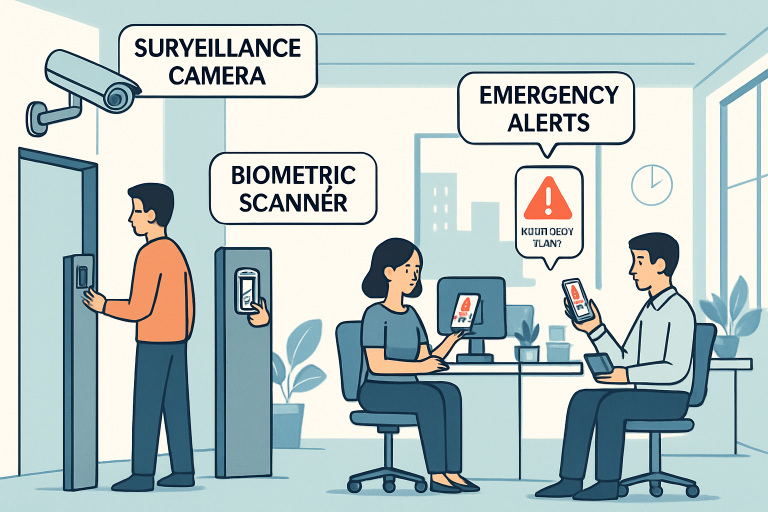
Office security no longer relies solely on keys or plastic badges. Modern systems deploy biometric methods—including fingerprint and facial scans—ensuring that only permitted individuals enter sensitive zones. These technologies dramatically reduce the possibility of lost keys, stolen cards, or unauthorized duplication.
Many businesses now use digital access apps that turn employee smartphones into secure entry passes. This allows for instant updates if any innovation needs change, such as after staff turnover, making security more responsive and flexible. Enhanced access control also integrates smoothly with visitor management, logging every entry and exit for compliance and audit purposes. Rigorous credentialing helps offices meet regulations without complicating daily routines.
Cybersecurity Integration
As the number of connected devices in offices grows, so does the surface area for cyberattacks. Integrating cybersecurity with physical security means that firewalls, encryption, and continuous network monitoring extend to IoT-enabled devices, including cameras, alarms, and access doors. Real-time oversight detects when unfamiliar devices join the network or when hardware acts outside of expected parameters.
Coordinating physical and digital security reduces the risk of data breaches from both internal and external sources. For example, securing physical access to server rooms with biometrics prevents unauthorized personnel from tampering with mission-critical systems. Regular penetration testing and updates are vital for staying ahead of new threats.
Smart Emergency Response Systems
In a crisis, seconds matter. Automated emergency alert platforms now instantly inform everyone onsite about immediate threats—using alarms, flashing lights, automated voice messages, and notifications directly to mobile devices. These systems can trigger building lockdowns, unlock escape routes, or activate surveillance to track unfolding events.
Integration and Rapid Response
Modern emergency solutions can integrate with law enforcement and medical responders, sharing real-time data feeds and reducing response times. Pathway guidance systems utilize illuminated directions or digital maps to direct people to the safest exits, particularly in the event of fire, weather, or security incidents. Comprehensive smart response technology transforms how companies handle the unexpected, cutting confusion and panic with data-driven, actionable guidance.
Energy-Efficient Security Solutions
Smart security doesn’t have to be energy-intensive. The adoption of solar-powered security cameras, battery-backed sensors, and LED-based alarms ensures continuous protection even during blackouts. These technologies are robust enough to operate independently of the main grid, supporting facilities in disaster-prone or remote areas.
Beyond reliability, energy-efficient solutions decrease operational costs and support corporate sustainability goals. This dual benefit helps businesses meet their carbon reduction commitments while maintaining compliance with safety standards. As demand for green buildings rises, integrating sustainable security infrastructure can also boost property value.
Importance of Regular Training
The best technology cannot replace human preparedness. Regular training sessions ensure that employees understand how to operate new systems and react under pressure. Drills that replicate real emergencies—like fire evacuations or cybersecurity threats—foster muscle memory and reduce panic. Students should also learn how to report security incidents, use emergency apps, and recognize suspicious behavior.
Building a Culture of Preparedness
Frequent reviews and updates of emergency protocols are vital. With new workplace threats and evolving technology, keeping everyone informed ensures synergy between tools and teamwork. Companies that invest in ongoing education empower their workforce to partner with smart systems, closing the gap between primary information and actionable response.
Conclusion
Smart office security is the result of harmonizing advanced technologies with human awareness and responsibility. By integrating intelligent surveillance, state-of-the-art access control, strong cybersecurity, reliable energy solutions, and regular employee training, modern workplaces are better prepared to face emergencies. A proactive, comprehensive approach lets businesses protect what matters most—people, assets, and continuity—now and into the future.
