

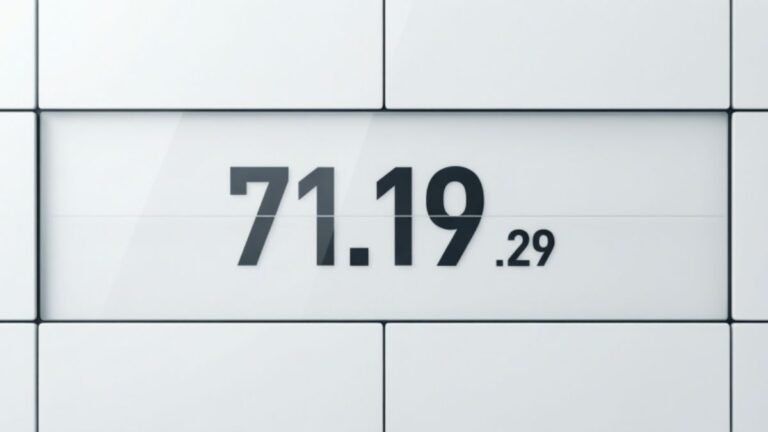
Some numbers look simple at first glance, yet carry layered meaning depending on where and how they are used. 71.19x.29 is one such identifier that sparks curiosity because it does not fit into everyday numeric patterns. It appears technical, structured, and deliberate, suggesting relevance in professional, analytical, or system-based environments. Whether you encountered it in documentation, a digital platform, or a reference dataset, understanding its role can save time and prevent confusion.
This article breaks down the meaning, context, and practical importance of this identifier in clear, human language. Instead of overwhelming you with jargon, we will explore how such structured values are interpreted, why accuracy matters, and how professionals work with similar identifiers in real situations. By the end, you will have a confident understanding of how to approach and interpret 71.19x.29 when you see it again.
Understanding the Structure of 71.19x.29
At its core, this identifier follows a structured numeric pattern rather than a random format. Numbers like this are often designed to communicate multiple layers of information within a single reference.
Why Structured Identifiers Exist
In technical systems, structured values are used to reduce ambiguity. Each segment may represent a category, version, measurement, or classification unit. The presence of decimals and separators suggests precision rather than approximation. This structure allows systems and professionals to interpret data consistently across platforms.
When someone encounters 71.19x.29, the format alone signals that it belongs to a defined framework. Such frameworks are common in engineering references, database indexing, analytical models, and performance metrics. Understanding the structure helps users avoid misinterpretation and ensures correct usage.
Human Interpretation vs System Interpretation
While machines read identifiers exactly as written, humans often need context. The challenge with values like this is not readability but interpretation. Without explanation, people may confuse it with a version number, ratio, or measurement. That is why documentation and contextual clues matter so much when dealing with identifiers of this nature.
ALSO READ:Understanding Rocl: Innovation and Technology in Modern Times
Where 71.19x.29 Is Commonly Used
Identifiers with this structure are rarely casual. They usually appear in professional or system-driven environments where consistency is critical.
Technical and Analytical Contexts
In technical documentation, structured numeric identifiers help track changes, measurements, or classifications. They may appear in system logs, internal references, analytical tools, or software environments where precision matters. The value 71.19x.29 fits naturally into these contexts because it looks designed for accuracy rather than estimation.
Such identifiers may also be used in performance tracking, experimental records, or digital frameworks where small variations carry meaningful differences. This makes them valuable but also easy to misunderstand if taken out of context.
Data Organization and Reference Systems
In databases and structured datasets, identifiers like this help organize information efficiently. Instead of long descriptions, a compact reference communicates meaning quickly to those who understand the system. This approach reduces errors, speeds up processing, and improves consistency across teams.
Why Accuracy Matters With Identifiers Like This
Precision is not optional when dealing with structured values. A small mistake can lead to incorrect conclusions or system errors.
Impact of Minor Errors
Changing even one digit or symbol can alter the meaning entirely. In many systems, similar identifiers may exist with slight variations, each pointing to something different. Misreading or mistyping such a value can cause data mismatches, reporting errors, or operational delays.
That is why professionals double-check values like 71.19x.29 before using them in reports, systems, or communications. Accuracy ensures that the intended reference is preserved.
Trust and Professional Reliability
Correct usage also builds credibility. When someone demonstrates a clear understanding of structured identifiers, it signals competence and attention to detail. This is especially important in collaborative environments where multiple people rely on shared data.
How Professionals Interpret and Validate Such Values
Understanding an identifier is not just about reading it. Validation and verification play a key role.
Contextual Verification
Professionals rarely interpret identifiers in isolation. They cross-reference them with documentation, system notes, or associated data fields. This process confirms that the value aligns with its intended meaning.
When working with something like 71.19x.29, context tells you whether it relates to performance metrics, configuration references, or analytical categories. This approach prevents assumptions and supports accurate decision-making.
Standardization and Consistency
Standard formats allow teams to communicate efficiently. When everyone understands how a value is structured, collaboration improves. Consistency reduces the learning curve for new users and minimizes errors in long-term projects.
Practical Scenarios Where 71.19x.29 Becomes Important
While it may seem abstract, identifiers like this have real-world relevance.
System Tracking and Analysis
In analytical environments, structured identifiers help track performance trends over time. They allow teams to compare results accurately and identify patterns without relying on vague descriptions.
Documentation and Reporting
Clear references simplify documentation. Instead of lengthy explanations, a concise identifier communicates meaning instantly to trained readers. This improves efficiency and keeps records organized.
Long-Term Data Integrity
Over time, systems evolve, but structured identifiers remain stable reference points. They allow historical data to remain useful even as tools and platforms change.
Common Misunderstandings to Avoid
Despite their usefulness, structured identifiers are often misunderstood.
Assuming Meaning Without Context
One of the most common mistakes is assuming what an identifier represents based on appearance alone. Without context, even experienced users can misinterpret a value.
Ignoring Documentation
Skipping official documentation leads to errors. Structured identifiers are almost always defined somewhere, and those definitions matter. Relying on guesswork undermines accuracy.
The Bigger Picture of Structured Identifiers
Values like 71.19x.29 are part of a broader system of precision and clarity. They reflect how modern systems prioritize accuracy, consistency, and efficiency.
As data volumes grow and systems become more complex, structured identifiers will only become more important. Understanding how to read and respect them is a valuable skill across many fields.
Conclusion
At first glance, 71.19x.29 may look like just another technical number, but its structure, precision, and usage tell a deeper story. Identifiers like this exist to bring clarity, not confusion, yet they require proper interpretation and respect for context. By understanding how such values are structured, where they are used, and why accuracy matters, you can approach them with confidence rather than uncertainty.
Whether you encounter this identifier in documentation, analysis, or system references, the key takeaway is simple: context and precision are everything. When handled correctly, structured identifiers become powerful tools for clarity, organization, and professional reliability.
FAQs
What does 71.19x.29 represent?
It represents a structured identifier used in technical or analytical contexts, where each segment has a defined meaning.
Is 71.19x.29 a measurement or a code?
It depends on the system using it. In most cases, it functions as a reference or classification rather than a casual measurement.
Why is correct formatting important for this value?
Even minor changes can alter its meaning, leading to errors in systems or reports.
Where might someone encounter this identifier?
It commonly appears in documentation, system references, data analysis environments, or structured records.
How can I verify its meaning?
Always check official documentation or contextual data associated with the system where it appears.
